
تجربة
The norias of Hama, then the road to Aleppo
Next stop on the road was Hama, on the Orontes between Homs and Aleppo. It is Syria’s fourth-largest city, about eight hundred thousand people, and one of the oldest places still lived in — Iron Age, and older names in the books. Aramaeans, Assyrians, Romans, Byzantines, Ottomans: the river kept them.
You cannot come here without the norias. The wooden wheels were built to lift water from the Orontes into aqueducts for farms and gardens. Some sites go back to Byzantine work; most of what stands is Mamluk and Ottoman. No electricity. The current turns the wheel. Wooden buckets fill at the bottom and empty into a trough at the top.
They run from about ten metres to twenty-one — nearly seventy feet. The largest, Noria al-Muhammadiyya, is among the biggest waterwheels ever built. You do not only see them. You hear them. The spokes creak, a deep groan along the bank.
North on the highway toward Aleppo the country changed again. Pistachio groves — Syria’s “red gold” — lined the road. Beside that, the war is still in the concrete: hollow houses, broken roadside buildings. Farming continues next to those shells. It is a quiet last stretch into Aleppo.
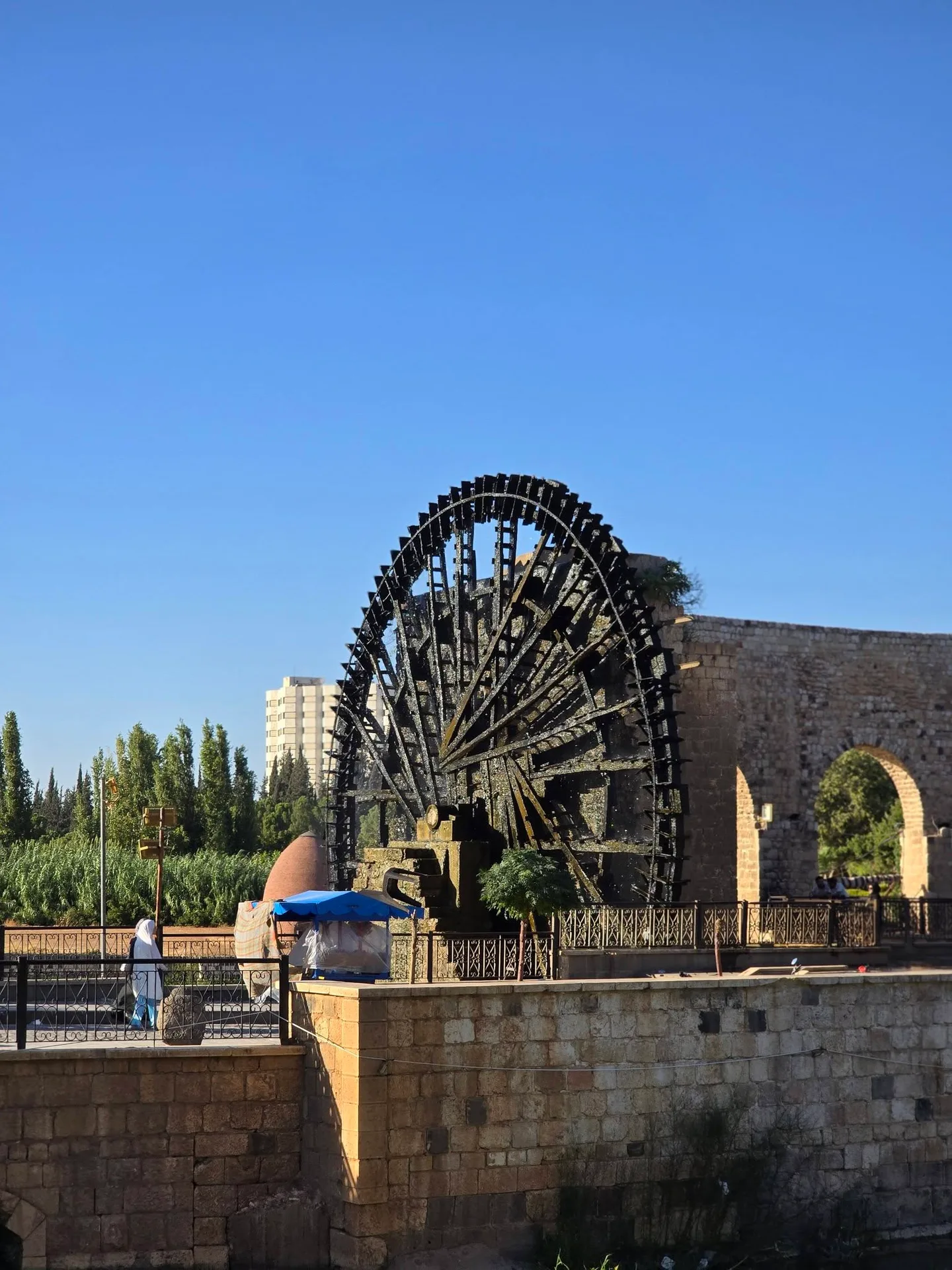
- The norias on the Orontes.
· حماة · Norias of Hama
ردود
لا ردود بعد.